





In today’s global media landscape, networking is often treated as a supporting function — something that happens on the sidelines of deal-making, rather than the engine that drives it.
But the reality is very different.
In an industry built on intellectual property, talent, rights, and storytelling, relationships are not secondary to value creation — they are the foundation of it. The real return on investment (ROI) of networking is not measured in the moment, but in what it unlocks over time: partnerships, financing structures, co-productions, distribution routes, and entirely new markets.

Beyond presence: what networking actually delivers
Unlike traditional marketing or advertising spend, the ROI of networking rarely shows up as an immediate conversion. Instead, it compounds.
A single introduction can lead to:
• A cross-border co-production agreement
• A new international distribution pipeline
• Strategic brand or sponsorship alignment
• A talent partnership that reshapes a project’s global reach
This is why the industry continues to invest heavily in physical markets and festivals — because proximity still matters in a fragmented digital world.
Established events such as MIPCOM have long played a central role in structuring the global content marketplace, bringing together buyers, sellers, and distributors under one roof. Alongside other legacy industry gatherings, they have defined how business has traditionally been done in media and entertainment for decades.
However, the industry is shifting.
From traditional markets to convergence ecosystems
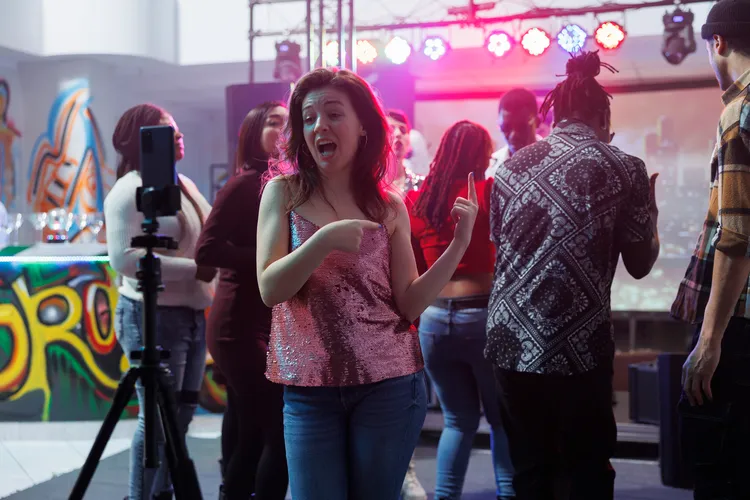
Media, entertainment, and sport are no longer separate verticals operating in parallel. They are converging into a shared ecosystem driven by new audience behaviours, digital platforms, creator-led distribution, and global IP expansion.
Audiences are no longer segmented neatly by sector. Sports storytelling is becoming entertainment IP. Entertainment formats are becoming global franchises. Media platforms are evolving into hybrid ecosystems of content, community, and live experience.
In this context, the expectations placed on industry events are changing too.
It is no longer enough to simply facilitate meetings between buyers and sellers. The new demand is for platforms that actively enable cross-industry collaboration, strategic thinking, and long-term partnership building.
Introducing Jupiter Festival Miami
Launching in Miami from October 6–9, Jupiter Festival Miami enters the landscape as a new kind of global gathering, designed specifically for this moment of industry transformation.
Jupiter Festival Miami is not positioned as a replacement for established markets, but as a response to how the industry is evolving.
In a world where content, audiences, and platforms are increasingly interconnected, the true ROI of networking is no longer just transactional — it is transformational.
It is about unlocking new forms of collaboration that would not happen in traditional structures. It is about accelerating ideas through cross-sector dialogue. And it is about creating the conditions where global partnerships can form faster, and more meaningfully, than ever before.
Because in the next era of media and entertainment, the most valuable outcome of any event is not attendance — it is what continues to happen long after the conversation ends.